Truth Over Tradition.
FIRE DEPARTMENT OVERTIME, STAFFING, AND SAFER GRANT
What MRI’S Report Means for Littleton
Published March 24, 2026 8:47 AM EST
From the Civic Accountability Desk, Littleton Reporter
LITTLETON, New Hampshire — A new operational and financial review presented by Municipal Resources, Inc. (MRI) provided the Littleton Select Board with a detailed look at fire department overtime, staffing levels, and long-term service demands, as the Town weighs whether to pursue federal funding to expand personnel.
Littleton Reporter attended the meeting, live streamed the full discussion, and provided real-time coverage. The full video can be viewed here: https://www.facebook.com/share/v/1CKLbWZSZK/
LITTLETON AS A REGIONAL HUB
A central theme of MRI’s presentation was Littleton’s role as a regional service hub. The Town was described as a primary service center in the North Country, providing fire and EMS response not only locally, but across contracted and surrounding communities. This includes Quick Response Force (QRF) operations that must be maintained at all times to ensure effective emergency coverage. Unlike many comparable municipalities, Littleton operates with fewer neighboring departments capable of sharing service load. MRI emphasized that this structural reality limits direct comparisons and increases operational demand.
THE SCOPE OF WHAT FIRE DEPARTMENTS DO
MRI also highlighted a broader misconception: modern fire departments are not limited to fire suppression and EMS transport. The department’s responsibilities span administration, inspections, training, hazardous materials response, public education, technical rescue, and emergency management functions. This expanded scope—growing significantly over the past 10 to 15 years—has contributed to increased workload and staffing pressure, even as call complexity rises.
UNDERSTANDING OVERTIME: WHAT IS DRIVING COSTS
MRI identified three primary categories driving overtime:
- Collective Bargaining Agreements (including earned time, contractual staffing minimums, and negotiated provisions)
- State and federal requirements (including training mandates, FMLA, injury leave, and compliance obligations)
- Emergency response demands (including off-duty call-ins when staffing levels are insufficient)
The report quantified at least 3,564 known overtime hours tied directly to these structured drivers.
In addition, MRI identified a second category of unanticipated overtime drivers, including:
- Sick time and injury-related absences
- Vacancies, resignations, and retirements
- Multiple simultaneous incidents
- EMS transport demand and regional contracts
- Mutual aid obligations
These unknowns make overtime budgeting inherently variable and difficult to predict with precision.
WHAT THE DATA SHOWS
MRI analyzed overtime across nine categories and identified several key trends:
- Call-back overtime decreased between 2022 and 2024
- Shift coverage and training remain the largest drivers of overtime usage
- Average overtime per firefighter decreased by more than 100 hours between 2022 and 2024
- Budgeted overtime is increasingly aligning with actual expenditures
- 2023 represented the highest overtime cost year in the review period
- 2024 overtime spending reflects approximately 54% of the total projected need
Additionally:
- Call-back overtime accounted for approximately 6.5% of total overtime
- Combined call-back and shift coverage accounted for roughly 70% of total overtime usage
- Over a longer timeline (2010–2025), MRI identified contributing factors including:
- Growth in full-time staffing and service demand
- Expansion of EMS contracts
- Adjustments following missed call incidents
- Changes in union agreements and minimum staffing levels
- Increasing call volume and frequency of simultaneous incidents
COMPARISON TO OTHER MUNICIPALITIES
MRI benchmarked Littleton against similar communities including Rye, Tilton/Northfield, Pelham, and Windham, Maine. The conclusion was clear: Littleton has the lowest overtime costs among its peer group. However, MRI cautioned that differences in geography, regional service roles, and available mutual aid make direct comparisons imperfect.
STAFFING EXPERIMENT: FIVE-PERSON MODEL
One of the most significant findings came from a temporary staffing pilot conducted between August and September 2025. During this five-person staffing model:
- Call-back overtime was reduced
- In-shift training was completed more efficiently
The department improved its ability to handle multiple or larger-scale incidents
MRI concluded that increasing baseline staffing can reduce reliance on reactive overtime, though it does not eliminate overall costs.
HIRING VS. OVERTIME: A BALANCING ACT
A central question raised during the presentation was whether hiring additional staff would reduce long-term costs.
MRI’s findings indicate:
- The first-year cost of a firefighter/EMT is approximately $125,000–$150,000 including salary, benefits, equipment, and training
- New hires may temporarily reduce certain overtime drivers
- Over time, additional staffing introduces its own overtime needs due to vacation, sick time, and contractual obligations
The conclusion: There is no scenario in which overtime can be fully eliminated. The issue is managing it within a sustainable balance.
EMS REVENUE AND REGIONAL SERVICE DEMAND
The department continues to generate revenue through EMS service contracts with surrounding municipalities. MRI identified this as one of three primary offsets to operational cost, alongside patient transport revenue and federal grant opportunities such as SAFER. Additionally, a temporary increase in Medicare reimbursement rates—up to 325% for certain EMS services—may provide short-term financial relief over the next two years.
RECOMMENDATIONS FROM MRI
MRI outlined the following recommendations:
- Apply for the 2026 SAFER Grant to fund additional staffing for a 36-month period
- Hire one firefighter in 2026 to absorb overtime and improve response capacity
- Hire an additional firefighter in 2027
- Reevaluate optimal staffing levels after implementation
- Facilitate collaboration between the Town and the union to reduce overtime strain and explore staffing strategies, including part-time or command-level support
BOARD DISCUSSION: LONG-TERM COSTS AND GRANT STRATEGY
Fire Chief Miller emphasized that preparing a SAFER Grant application requires approximately 150 hours and must be completed ahead of the May deadline. The Select Board discussed the long-term implications of accepting federal funding, particularly the Town’s financial responsibility once grant support expires. Board member Taylor Caswell noted the importance of planning for post-grant costs, while Chief Miller clarified that the Town’s obligation increases after a multi-year period tied to the grant structure.
DEPARTMENT GROWTH OVER TIME
The department has expanded significantly:
- Approximately 10 years ago: 6 full-time staff
- Today: 16 full-time staff
This growth reflects increased demand, expanded service scope, and Littleton’s evolving role as a regional emergency response provider.
ACTION TAKEN
The Select Board voted 5-0 to approve the hiring of a contractor to prepare and submit a SAFER Grant application. If awarded, the grant would support the addition of a firefighter in the coming year.
WHY THIS MATTERS
The MRI report reinforces a broader reality: Fire and EMS services are becoming more complex, more regional, and more resource-intensive. For Littleton, that pressure is amplified by its role as a hub community—serving both residents and surrounding towns with limited redundancy in the system.
BOTTOM LINE
Overtime in Littleton’s fire department is not the result of a single factor or isolated decision. It is driven by a combination of contractual obligations, legal requirements, staffing realities, and increasing service demand.
The question is not whether overtime can be eliminated.
It cannot.
The question is how to manage it—through staffing, budgeting, and policy decisions that reflect the realities of modern emergency service delivery.
⎯⎯⎯⎯⎯
Truth Over Tradition.
© 2026 Littleton Reporter. All rights reserved. Sharing is welcome—reposting in full is not. For permission to republish or quote, please message us directly.
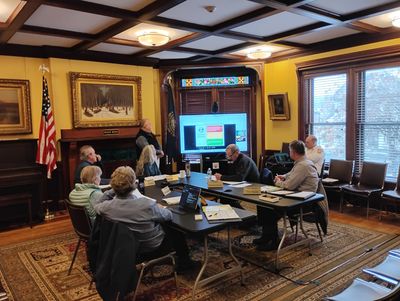
Photo: Littleton Select Board meeting on March 23, 2026 during presentation by MRI © 2026 Littleton Reporter. All rights reserved.
#LittletonReporter #LittletonNH #FireDepartment #PublicSafety #CivicAccountability #LocalGovernment #EMS #SAFERGrant #FEMA #Infrastructure #MunicipalFinance #NorthCountryNH
SENIOR CENTER CLIENT COUNTS UNDER REVIEW
Littleton Reporter Examining Discrepancies In Annual Report
Published March 16, 2026 7:10 AM EST
From the Civic Accountability Desk, Littleton Reporter
LITTLETON, New Hampshire — Littleton Reporter is currently reviewing statistical data submitted by the Grafton County Senior Citizens Council for inclusion in the Town of Littleton Annual Reports covering the years 2022 through 2025.
During a recent meeting with Littleton Reporter investigator December Rust, GCSCC Executive Director Kathleen Vasconcelos stated that certain figures reported in the 2024 Town Report were overstated due to the way clients were counted in particular circumstances. The conversation occurred while Rust, a Select Board candidate from the recent election, was visiting the center to better understand its services and use of public funding.
The data relates to services provided through the Littleton Area Senior Center, including the number of residents served, transportation rides, outreach contacts, meals provided, activities, and other program metrics reported to the town.
A review of the four-year dataset shows several significant changes across multiple reporting categories, prompting additional questions about how the figures were compiled and how service levels have changed during that period.
Littleton Reporter has submitted a detailed inquiry to GCSCC seeking clarification regarding:
1. How were reported figures were calculated?
2. Were earlier reports were affected by counting errors?
3. How is data reviewed before submission to the Town?
4. How have service levels changed between 2022 and 2025?
At this time, the review is focused on examining how the reported figures were compiled and ensuring that the public record accurately reflects the services provided to Littleton residents. Because the Littleton Area Senior Center receives public funding and its reported program data appears in the Town of Littleton Annual Report distributed to voters, accurate reporting is essential so residents can make informed decisions regarding the use of taxpayer funds.
On March 10, Littleton voters approved a warrant article appropriating $35,750 in public funding for the Grafton County Senior Citizens Council to support operations at the Littleton Area Senior Center. The organization has received public appropriations from the Town in prior years as well.
Town Reports and warrant articles are among the primary sources voters rely upon when evaluating requests for public funding. As a result, the accuracy and consistency of reported service data are central to ensuring that residents have clear and reliable information when making decisions about the allocation of taxpayer dollars.
Littleton Reporter has submitted a series of questions to GCSCC regarding the reported figures, including how the data was compiled, who prepared the reports submitted to the Town, and what review process was in place prior to publication.
Littleton Reporter will publish additional information as responses are received and the review continues.
⎯⎯⎯⎯⎯
Truth Over Tradition.
© 2026 Littleton Reporter. All rights reserved. Sharing is welcome—reposting in full is not. For permission to republish or quote, please message us directly.
#LittletonReporter #LittletonNH #CivicAccountability #LocalGovernment #SeniorServices #NorthCountryNH #NewHampshire

POLLS CLOSED IN LITTLETON: Ballot Count Underway
Published March 10, 2026 7:06 PM EST
From the Civic Engagement Desk, Littleton Reporter
LITTLETON, New Hampshire — Voting has officially closed in Littleton for Town Meeting Day 2026.
Election officials are processing the remaining ballots through the voting machine. Because ballots were scanned throughout the day as they were cast, a substantial portion of the vote has already been counted unofficially, and preliminary totals will emerge later this evening.
Littleton Reporter is on site and will provide updates as the counting proceeds. We will go live as totals are announced.
⎯⎯⎯⎯⎯
Truth Over T

LITTLETON VOTERS HEADING TO THE POLLS TODAY
Littleton Reporter Will Provide Live Coverage Tonight When The Count Is Complete
Published March 10, 2026 10:04 AM EST
From the Civic Engagement Desk, Littleton Reporter
LITTLETON, New Hampshire — Voting is underway today in Littleton as residents head to the polls for Town Meeting Day and local elections.
Polls opened this morning and will remain open until 7:00 p.m. at the DPW Highway Garage, 28 Boynton Lane, where registered voters are casting ballots for both municipal and school district positions.
Town Meeting Day is the annual opportunity for residents to elect local officials and participate directly in decisions affecting town governance and school district leadership.
⎯⎯⎯⎯⎯
WHEN AND WHERE TO VOTE
Voting for the Town of Littleton and the Littleton School District is taking place today:
• Tuesday, March 10, 2026
• 8:00 a.m. – 7:00 p.m.
• DPW Highway Garage
• 28 Boynton Lane
• Littleton, New Hampshire
Registered voters may arrive at any time during those hours to cast their ballots.
⎯⎯⎯⎯⎯
WHAT IS BEING DECIDED
Ballots today include local offices and positions affecting both town governance and the Littleton School District.
Town Meeting Day elections determine who will serve in key municipal roles while also shaping school district leadership through separate ballot questions and candidate races.
⎯⎯⎯⎯⎯
LITTLETON REPORTER COVERAGE
Littleton Reporter will be reporting from the polling location throughout the day.
Once polls close and the ballot count begins, Littleton Reporter will go live as the official results are announced, providing real-time coverage as the outcome becomes known.
Littleton Reporter member December Rust is a candidate in today’s election for Select Board and Library Trustee. This coverage is being provided as part of Littleton Reporter’s ongoing reporting on Town Meeting Day and local civic participation.
⎯⎯⎯⎯⎯
Truth Over Tradition.
© 2026 Littleton Reporter. All rights reserved. Sharing is welcome—reposting in full is not. For permission to republish or quote, please message us directly.
#LittletonReporter #LittletonNH #TownMeetingDay #TownMeeting2026 #LocalElections #CivicEngagement #NorthCountryNH #NewHampshire

MEET THE CANDIDATES

Friday Night At The Opera House
A public candidate forum is scheduled for residents who want to hear directly from the candidates running for Littleton Select Board.
Date: Friday, March 6, 2026
Time: 6:00 p.m. – 8:00 p.m.
Location: The Littleton Opera House
The event will be moderated and include time for the community to pose questions. The forum will also be recorded and posted on the Granite North TV YouTube channel.
Littleton Reporter encourages voters to attend.
REGIONAL ENVIRONMENTAL UPDATE
What 2025 Data Reveals About Household Hazardous Waste In Grafton County
Published February 26, 2026 6:41 PM EST
From the Environmental Desk, Littleton Reporter
LITTLETON, New Hampshire — Every year, thousands of pounds of flammable liquids, oil-based paints, pesticides, automotive chemicals, and mercury-containing materials accumulate in garages and basements across the region. While these products are common in rural households, their disposal carries significant environmental and financial implications.
The newly released 2025 Annual Report from the Pemi-Baker Solid Waste District provides a detailed look at how regional hazardous waste is being managed, what it costs, and how participation levels are trending. The data also offers a broader lens into how cooperative waste districts function as preventive infrastructure — mitigating long-term environmental risk while stabilizing per-resident costs in rural communities.
At a time when landfill capacity, transportation expenses, and environmental compliance costs are rising statewide, the numbers tell a larger story about prevention, public health, and municipal finance in northern New Hampshire.
REGIONAL EFFORT TO REDUCE IMPACT
The Pemi-Baker Solid Waste District is a 19-member municipal cooperative serving communities across Grafton County and surrounding areas, including Littleton. The District coordinates regional efforts to reduce waste, increase recycling, and provide safe disposal options for materials that cannot legally or safely enter regular household trash streams.
Among its most visible functions is the organization of Household Hazardous Waste (HHW) collection events, which allow residents to properly dispose of items such as:
• Flammable liquids
• Oil-based paints
• Pesticides
• Automotive chemicals
• Mercury-containing products
• Fluorescent light bulbs with PCB-containing ballasts
These materials pose environmental and public health risks if landfilled improperly or dumped illegally.
2025 BY THE NUMBERS
According to the District’s 2025 Annual Report, two one-day Household Hazardous Waste (HHW) collection events were held last year — August 3 in Littleton and September 20 in Plymouth. A total of 327 households participated, representing nearly every community within the District.
Across both events, 5,985 pounds of hazardous materials were collected. Nearly 28 percent of that total was identified as flammable material.
Total HHW program expenses reached $34,565.15, marking a 33 percent increase over 2024 costs. Funding support helped offset those expenses, including a $10,000 contribution from Casella Waste Management and $5,405 from the New Hampshire Department of Environmental Services. After those contributions, the net expenditure was $17,602.15 — equivalent to approximately $0.60 per district resident.
In addition to the hazardous waste events, the District coordinated a fluorescent bulb collection initiative. That effort resulted in the proper disposal of 10,736 linear feet of fluorescent tubes and the removal of 147 PCB-containing light ballasts, at a total cost of $1,193.09.
Two additional HHW collection events are scheduled for 2026, including one again in Littleton.
WHY HOUSEHOLD HAZARDOUS WASTE MATTERS
Household hazardous waste includes products commonly stored in garages, basements, and sheds. When improperly disposed:
• Flammable materials can cause landfill fires.
• Mercury and PCBs can leach into soil and groundwater.
• Chemical runoff can enter municipal water systems.
• Improper disposal increases long-term remediation costs.
New Hampshire law prohibits the disposal of certain hazardous materials in regular municipal solid waste. Municipalities that fail to manage hazardous waste properly may face environmental compliance consequences and higher future cleanup costs.
REGIONAL AND STATE CONTEXT
According to the New Hampshire Department of Environmental Services (NHDES), municipal solid waste disposal statewide has fluctuated in recent years due to inflation, rising transportation costs, and increasing pressure on regional landfill capacity. The agency continues to encourage hazardous waste programming through state grant assistance as a way to reduce long-term environmental risk. In rural areas, cooperative district models such as Pemi-Baker are relied upon heavily to control per-resident costs and stabilize operational expenses.
Statewide Uniform Municipal Reports show that New Hampshire residents generate approximately 4.5 pounds of municipal solid waste per person per day. Recycling rates vary significantly across regions, reflecting differences in infrastructure and participation levels. Household hazardous waste collection events are consistently identified as one of the most cost-effective mitigation tools available to rural counties.
Within Grafton County specifically, population density remains significantly lower than in southern New Hampshire counties. As a result, transportation costs associated with waste hauling are proportionally higher. Cooperative district structures have therefore proven more financially efficient than individual town-by-town management models.
The 33% year-over-year increase in HHW programming costs in 2025 aligns with broader inflationary pressures impacting waste hauling, fuel, disposal contracts, and environmental compliance requirements statewide.
COST PER RESIDENT AND WHAT’S AHEAD
The District’s reported net cost of approximately $0.60 per resident underscores the economic logic of prevention. Environmental remediation for contaminated soil or groundwater can easily reach tens of thousands of dollars for smaller cleanup projects and escalate into the millions when long-term groundwater contamination is involved. By comparison, regional household hazardous waste programs represent a fractional, preventive investment that reduces future liability and environmental risk. For communities such as Littleton, participation in a regional solid waste district helps distribute costs, minimize duplication of services, and maintain stable long-term compliance with environmental standards.
For residents, participation in these programs remains voluntary but carries district-wide impact. Individuals interested in future events can monitor municipal postings for meeting schedules, contact the District directly for information, and plan to attend the upcoming household hazardous waste collection events scheduled for August and September 2026. Littleton Reporter will provide coverage of those 2026 events, including dates, participation details, and reported outcomes.
The 2025 Pemi-Baker Solid Waste District report reflects rising operational expenses, steady resident participation, continued reliance on state and private funding support, and a comparatively low per-resident financial burden. As waste management and environmental compliance costs increase statewide, cooperative district models continue to stand out as one of the most economically rational approaches for rural northern New Hampshire communities.
⎯⎯⎯⎯⎯
Truth Over Tradition.
© 2026 Littleton Reporter. All rights reserved. Sharing is welcome—reposting in full is not. For permission to republish or quote, please message us directly.
Sources: Pemi-Baker Solid Waste District 2025 Annual Report, New Hampshire Department of Environmental Services, New Hampshire Department of Safety Municipal Reports, U.S. Environmental Protection Agency
#LittletonReporter #LittletonNH #GraftonCounty #NorthCountryNH #WasteManagement #HouseholdHazardousWaste #Recycling #EnvironmentalHealth #MunicipalFinance #PublicInfrastructure
A Legal Explainer on the Sidewalk Configuration at Porfido's
Published February 22, 2026 7:17 PM EST
From the Public Safety Desk, Littleton Reporter
LITTLETON, New Hampshire — Recent reporting on sidewalk obstruction in front of Porfido’s Market & Deli has generated significant public response. Many comments assert that the parking configuration has “been that way for years” and therefore should not be questioned.
This explainer separates tradition from law and examines the applicable local ordinances, state traffic statutes, and federal accessibility standards relevant to the location.
This is not an attack on a long-standing local business. It is a review of public right-of-way design, pedestrian access, and roadway safety standards.
HISTORICAL CONTEXT VS. LEGAL STANDARDS
Porfido’s Market & Deli has operated in downtown Littleton since 1920. However, the current sidewalk configuration was constructed during the 2009–2010 Main Street Revitalization Project.
The Americans with Disabilities Act (ADA) became law in 1990. Updated ADA design standards took effect in 2010. The relevant legal question is not when the business opened. It is when the sidewalk was reconstructed.
When public sidewalks are newly built or substantially altered, ADA compliance requirements apply under Title II of the ADA (public entities).
THE REALITY
The attached images document:
• Vehicles parked perpendicular to the building.
• No interior curb separating sidewalk from vehicle area.
• A parking meter installed within the pedestrian path.
• No marked parking stalls.
• No designated accessible parking space.
• Vehicles reversing directly into Main Street (a state highway).
• When larger vehicles are present, the remaining pedestrian path is under three feet wide.
These are observable conditions, not interpretations.
FEDERAL LAW: ADA SIDEWALK REQUIREMENTS
Under the 2010 ADA Standards for Accessible Design:
• Minimum clear pedestrian width: 36 inches (3 feet).
• If the width is less than 60 inches, passing spaces must be provided at intervals.
• The accessible route must remain unobstructed.
• A parking meter or vehicle overhang cannot reduce required minimum width.
If the pedestrian path narrows below 36 inches due to:
• Design,
• Installed infrastructure,
• Or parked vehicles,
Then the accessible route does not meet federal standards.
Additionally, because the sidewalk was reconstructed in 2009–2010, it does not fall under pre-ADA “existing facility” exceptions. Alterations trigger compliance obligations.
ADA & PARKING FACILITIES
If the paved area in front of the building functions as customer parking, federal Title III ADA requirements apply to places of public accommodation.
Parking areas serving businesses must:
• Provide designated accessible parking spaces.
• Include proper signage.
• Maintain compliant access aisles.
• Connect to an accessible route.
At present, there are:
• No visible painted parking lines.
• No marked accessible parking space.
• No visible ADA signage.
If the area is not legally designated as a parking lot, vehicles should not be parked there.
If it is functioning as a parking lot, ADA requirements apply.
LITTLETON TRAFFIC ORDINANCE – CHAPTER 1
Under Littleton’s Traffic Ordinance, Chapter 1: “It shall be unlawful to park on any sidewalk or crosswalk.”
The ordinance does not provide a “tradition” exception.
The ordinance also defines:
• “Sidewalk” as all sidewalks laid out for pedestrian use.
• “Park” as the standing of a vehicle, whether occupied or not.
If vehicles are positioned in a manner that encroaches upon sidewalk space, the ordinance is implicated, and fines are authorized for violations. In the single instance documented in the attached photographs, two apparent Chapter 1 violations are visible. Similar conditions have been observed on a routine basis at this location, raising questions regarding consistency of enforcement.
BACKING ONTO A STATE HIGHWAY
Main Street is a state roadway under NHDOT jurisdiction. Under New Hampshire traffic law (RSA 265), drivers must:
• Exercise due care.
• Not back vehicles unless such movement can be made safely.
Regular backing from perpendicular spaces directly into active state highway traffic raises safety questions, particularly where:
• Sight lines may be obstructed.
• Larger vehicles are present.
• Pedestrian traffic exists.
Whether the driveway configuration meets NHDOT access management standards is a legitimate public safety question.
THE CURBING DIFFERENCE
Without interior curb separation:
• The sidewalk visually blends into the vehicle area.
• Encroachment becomes normalized.
• Pedestrian priority becomes ambiguous.
Design communicates use. If design invites parking behavior, enforcement alone does not resolve accessibility conflicts.
THE GRANDFATHERING MYTH
Grandfathering generally applies to:
• Pre-existing lawful structures under zoning.
• Nonconforming land uses.
Grandfathering does not override:
• Federal ADA compliance following alteration.
• Public safety statutes.
• Local traffic ordinances.
• Ongoing Title II obligations of municipalities.
Because the sidewalk was reconstructed in 2009–2010, it is not exempt from modern accessibility standards. Longevity of a business does not supersede federal civil rights law.
RESPONSIBILITY: TOWN OR STATE?
Littleton firmly states that NHDOT designed the Main Street section. NHDOT indicated that the Town is responsible for design. If responsibility is unclear between state and municipal authorities, that governance ambiguity itself is newsworthy. Public infrastructure requires clear accountability.
Either way, under Title II ADA, the entity responsible for maintaining the public right-of-way is responsible for ADA compliance. In this case, that is Littleton.
DOWNTOWN LITTLETON HAS CHANGED
The claim that “it has always been that way” does not account for:
• Increased traffic volume.
• Larger modern vehicle dimensions.
• Growth in tourism.
• ADA accessibility requirements.
• Modern pedestrian safety expectations.
Littleton today is not Littleton of 1920. Infrastructure must reflect present conditions.
QUESTIONS THAT REMAIN
This explainer raises the following legitimate civic questions:
1. Does the current sidewalk width meet ADA minimum standards?
2. Why was this section designed differently during revitalization?
3. Is the paved area legally designated as a parking lot?
4. If so, where is the required accessible parking?
5. Does the driveway configuration meet NHDOT access standards?
6. Which entity is legally responsible for compliance and enforcement?
These are governance questions.
WHY THIS MATTERS
Public sidewalks are intended for:
• Pedestrian movement.
• Wheelchair access.
• Strollers.
• Individuals using mobility aids.
Littleton’s own ordinance states it is unlawful to park on a sidewalk.
Federal law requires accessible routes.
State law requires safe vehicle operation.
The discussion is not about tradition.
It is about compliance, safety, and accessibility in a modern downtown.
Littleton Reporter will continue seeking clarification from municipal and state officials regarding enforcement, design responsibility, and any planned corrective measures.
⎯⎯⎯⎯⎯
Editor's Note: Photo has been added to show the lack of accessibility at this location when vehicles block the sidewalk, park on the sidewalk and park at the meter.
⎯⎯⎯⎯⎯
Truth Over Tradition.
© 2026 Littleton Reporter. All rights reserved. Sharing is welcome—reposting in full is not. For permission to republish or quote, please message us directly.
Photos © 2026 Littleton Reporter. All rights reserved.
#LittletonReporter #LittletonNH #DowntownLittleton #PublicSafety #ADACompliance #NHTrafficLaw #PedestrianAccess #AccessibilityMatters #MunicipalGovernance #InfrastructureAccountability
